Architectural vs Real Estate Photography
At first glance, the two disciplines seem interchangeable. Both photographers arrive on location with a camera, set up a tripod in the corner of a room, and walk away with images of spaces. But show the results to anyone in either industry and they'll immediately know which is which. The difference runs deeper than style. It's rooted in purpose, audience, and the very question each image is trying to answer.
Real Estate Photography
Real estate photography asks a single question: would you live here? The image functions as a sales tool first and a photograph second. Speed matters enormously; a real estate photographer may shoot a complete home in under two hours and deliver edited images the next day, with upwards of 50+ images. This leaves little time for rearranging furniture, fussing with lighting and props, de-cluttering etc. The space needs to be ready for the photographer, because there is little to no retouching in real estate photography. No photoshopping out stained flooring, crooked drapes, or wires; the property should be shown as is. Many real estate photographers utilize auto-HDR or AI to speed up the editing process, which results in you’re standard bright, even, flat image with extreme “window pulls” (the technique of bringing in the proper exposure from outside the window). The goal of the images are to show a cohesive, informative gallery capturing the layout, spaces, and features of the home.
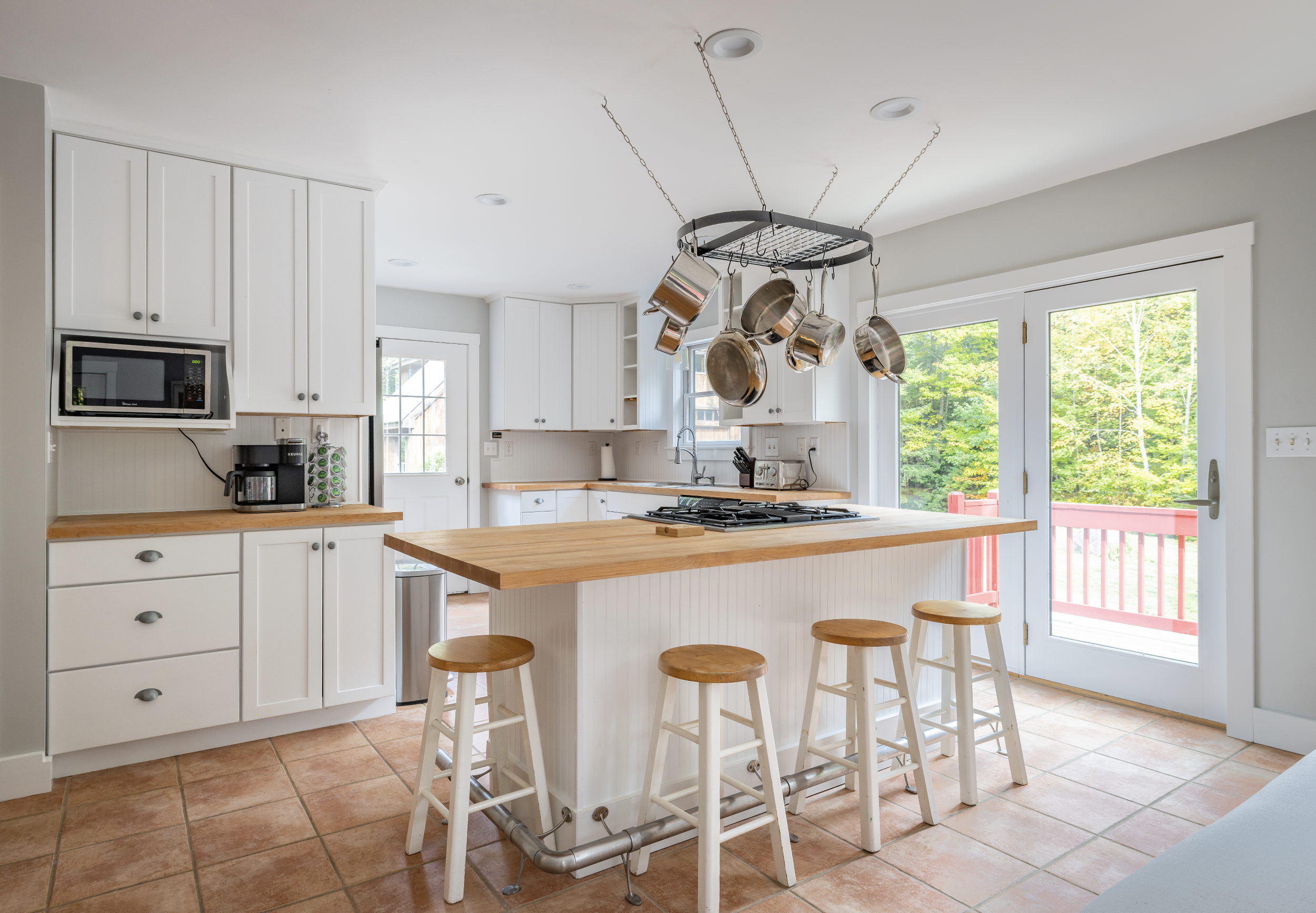
Real estate image of a kitchen, without retouching.
Architectural Photography
Architectural photography asks something different altogether: what does this design mean? It treats a structure as a subject worthy of study; examining the details of every design decision, highlighting symmetry or asymmetry, capturing an architect's concept materialized in the real world. The work is closer to journalism or documentary, rather than for immediate sale. Shoots often span a couple hours per room to an entire day or two for large custom homes, returning at different hours as the sun repositions itself. These projects involve more people and time analyzing, planning, styling, lighting, and adjusting to capture the right frames. But the work doesn’t end the day of the photoshoot. Unlike 24-48 turnaround for real estate, the post-processing for architectural photography can take weeks. A single image can consist of 5-8 photos manually composited together, taking hours to edit and refine to create the perfect image. The entire process is slower, more deliberate, and yields a gallery of high-end images the architect, interior designer, or builder can utilize for their portfolio for years. Unlike the short shelf life of real estate photos, architecture photos are timeless.
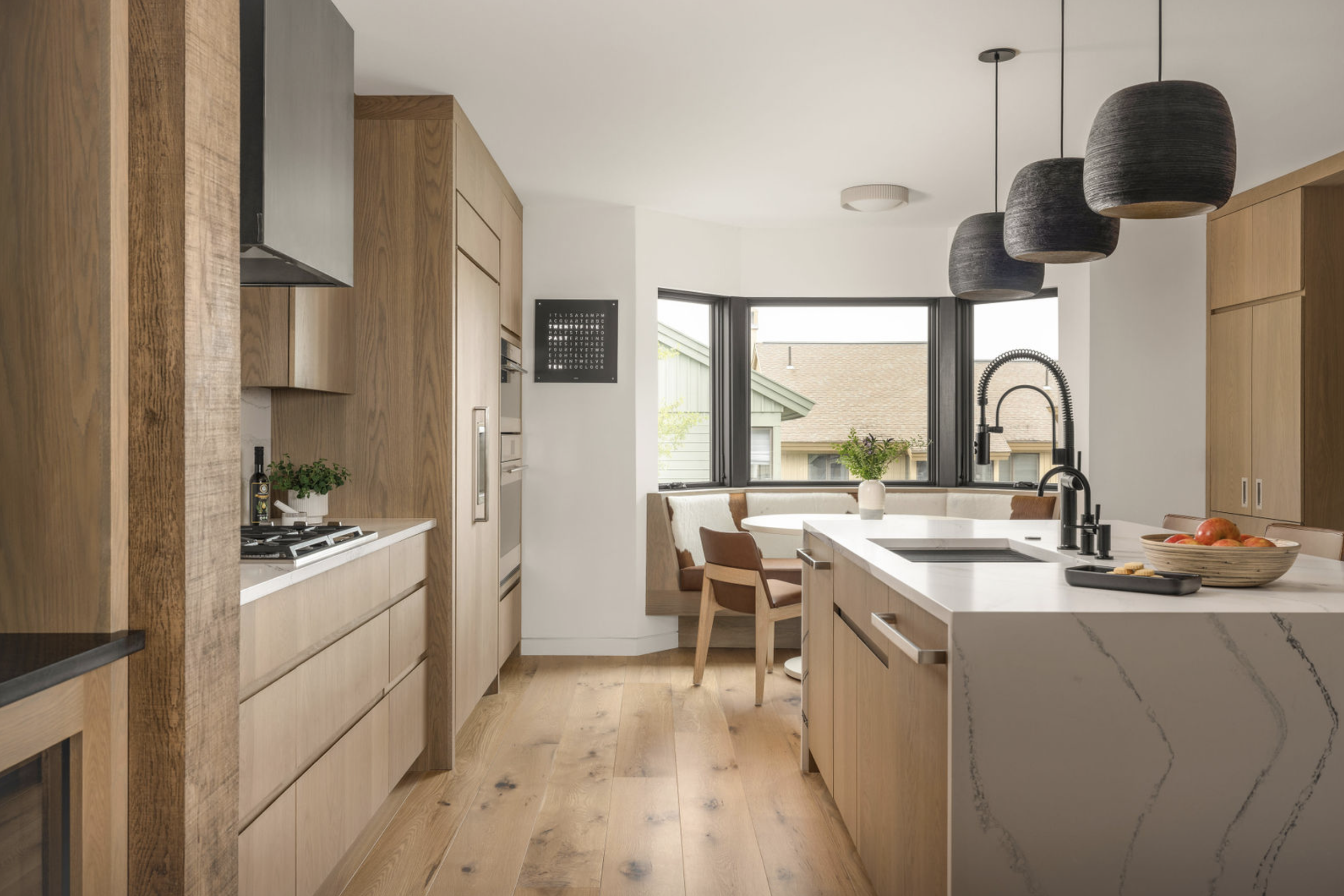
Architectural image of a kitchen, with compositing and retouching.
Tools of the Trade
Even though real estate and architectural photography have many differences in style and execution, the gear is fairly similar. We use a Canon R5 Mark II with a 15-35mm lens for a majority of our work, capturing wide angles and tall spaces. However, architectural photography typically include other lens ranges to create vignettes and details shots that create a story about the space. Our go-to’s are the Canon RF 50mm and Canon RF 70-200mm.
Curious about learning more? We are always educating clients and other photographers in this field, and love spreading knowledge about how we work!